As we sprinted down the path in the pouring rain, the tall grass concealed us from the world. We whipped along over the rocks and into the clearing as the scenery vanished at the edge of our periphery. Everything looks the same when it rains. The colors of the trees seem almost as dark as the sky and time seems to slow down. All my perceptive powers were dulled. The air had gone out of my lungs. I was out of shape and tired but we were almost there, at our goal, and after everything we had been through nothing was going to stand in our way. At that moment, as I had so many times before, I asked myself “how did we end up here?”
The locals will always tell you that the best time to visit Salem is in October. Once a haven for Puritans, this coastal hamlet has existed since the earliest days of the American Colonies, when Roger Conant came over from England and became, in 1626, the first Governor of the city. If you have read a book on American History you will likely have heard that apart from it’s age, the city is most well known for the Witch Hysteria of 1692, in which a bunch of children essentially conned their parents and other adults into having village elders hung as witches, probably because they found older people creepy. It’s hard to ascertain their true motivations for making such claims, as all the principle players have been dead for centuries, but it was an incident that remained burned in the consciousness of our nation ever since. Naturally, tourists love the story. Every October, they’re out in droves to see the various shops, colonial era houses, statues and, of course, the old cemeteries which contain some very interesting 17th Century gravestones. Stories abound of ghosts and hauntings in many of the buildings. It’s my personal belief that such tales are remnants carried over from those early days, when every scary story was a good way to keep children from going out after dark.
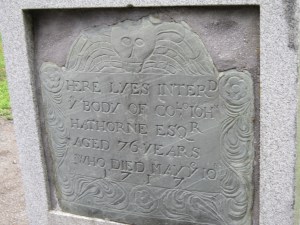
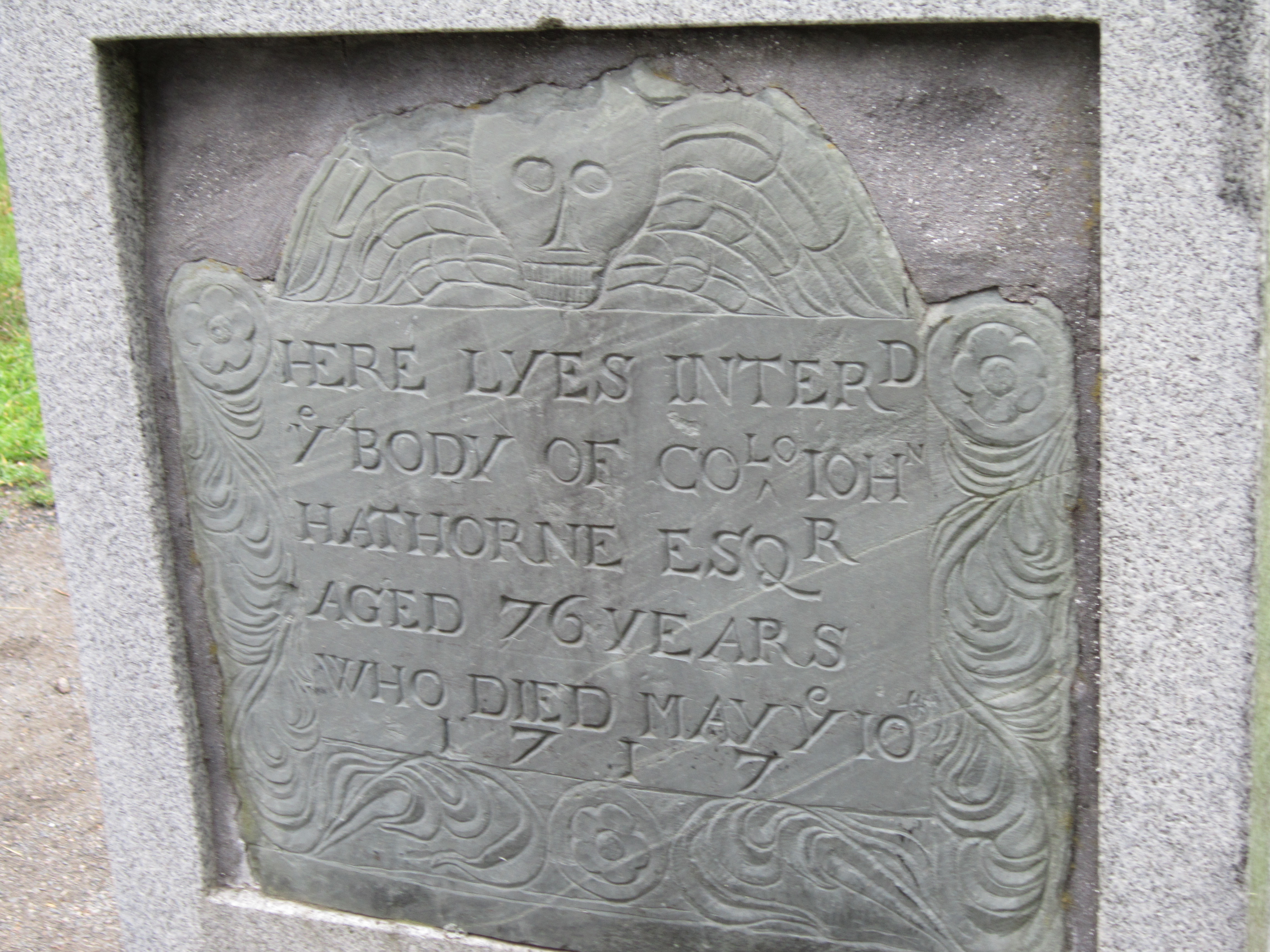
The grave of infamous Witchcraft Trial judge John Hathorne. His actions condemned innocent people to death. (Click to view Larger)
D and I were exploring the town on a cloudy day in June of 2011. I had already been to Salem numerous times in my life and felt I knew the area well enough to be an effective tour guide. We were in the Old Burying Point Cemetery (a must visit, if you’re in town) so that I could share my hobby of visiting old graveyards with him. The clouds opened up and rain started to drip down. As a drizzle became a pour, we had lunch and kept dry. Afterwards, we checked out some stores at the local mall to check out the endless trinkets now so familiar to my eyes. There were places to see in town, but I had done it all before and after touring The House of the Seven Gables (tour is short and overpriced, house is empty, senior citizens can’t get enough), The Witch House (none of the Salem “Witches” ever lived there, but sheriff George Corwin did), and the cemetery, we had completed what I felt were the authentic historic spots worth seeing in town. But it was early yet, and the rain continued to fall. We’d been having fun all week, but this day didn’t seem as exciting as the others. It felt like something was missing, but then D made a suggestion that changed everything. He felt it was time to visit Danvers.
Danvers is the town next door, but it’s history is just as important as Salem’s. After all, both were once part of Salem Village where the Witchcraft Trials took place. But if Salem is the town happily flaunting its association with the hysteria of 1692, Danvers is the town that likes to avoid the spotlight. What happened within its borders is something the people there seem less proud of. In 1992, the Salem Witchcraft Victims Memorial was dedicated there in time for the 300th anniversary of the trials. It was the first monument to recognize all of the victims, including those that died in prison. But on that day, we didn’t know what to look at. At first we drove by various old residences, including the former home of Bridget Bishop which is now a private residence. But then we stopped for a bit so I could check my GPS. I looked up nearby historic properties and came up with one that piqued my interest. On the screen it read “Rebecca Nurse Homestead.” I had no idea what we were about to experience as I told the GPS to guide us there.
If you grew up in Massachusetts, you would have heard about Rebecca Nurse at one time or another. It’s an easy name to remember and for many people she had come to represent the tragedy of the trials, the archetype of the innocent person wrongfully executed due to the fear and suspicion of others. I can’t remember the name of the TV Special we watched in school about her and her sisters, but I do recall she was depicted as being much younger than her actual age of 71. We’re always being told that people “had a shorter life expectancy in those days” but the more history I read, the more people I hear about who lived past this supposed life expectancy. Are they the chosen few? I can’t say for certain, but Rebecca Nurse was among them. Born in Yarmouth, England in 1621, Rebecca Towne would go on to marry Francis Nurse, also born in England, after her family settled in Salem in 1640. Later accused of witchcraft by members of the Putnam family in 1692, she was found guilty all too quickly, and met her untimely end on June 19, 1692.
But death would not be the end of Rebecca Nurse’s tale. Her last journey would take place after her son dug up her body from the shallow grave she had been dumped in. The tradition of the times was that those hung for witchcraft were buried where they died, so as not to contaminate the resting places of people more beloved to the community. But her son was determined to see that his mother got a proper burial and as he had witnessed the execution (a horrible enough thing to endure), he couldn’t abide any further disrespect to his family. He had seen where they buried her and, under cover of darkness, dug her up and escaped by boat with the body of Rebecca Nurse. She was taken back to the family cemetery where she was buried in secret. It was only later that, when people learned of the tale, that a monument was built in that same cemetery on her family’s land.
It was after 5 p.m. when we reached the dirt path leading up to the Rebecca Nurse Homestead. The winding drive terminates in a field with a big wooden fence, made out of large enough logs to deter entry when the gate is locked. We were a bit surprised to find it wide open with the chain on the ground. Nobody else was in sight. Perhaps, if I had not just met my brother for the first time that week and hadn’t felt the need to show him a great time (as opposed to a merely “good” one) I would not have felt as compelled to trespass. But then, I hadn’t been the one who left a gate open to a historic property. D didn’t need any convincing. As I looked over I could see he was already right there with me, having the same idea I was. The opportunity was too enticing. We’d have to risk it. My initial paranoia soon gave way to an increasing excitement that pushed me forward. History took place here, and the feeling was palpable. There was an old wooden shed and a much newer looking house, painted a fire engine red. It would have to be a restoration as it looked too pristine. But there was an old world quality to its size and construction. I’m no architect, but it seemed to me that parts of the building must be older than they appeared at first glance. There was a small garden in front of the entryway, enclosed by a small wooden fence. A good place to call home in the 17th Century and not too shabby looking now. We didn’t try to go in, as properties like this typical have hidden security measures to deter intrusion. Just because the gate had been left open, didn’t mean there couldn’t have been video footage of us wandering around, for all we knew. Just behind a row of trees in the back, and beyond a large open field, D spotted something that appeared to be a cemetery surrounded by trees.
The cemetery itself is small, but historically significant for its ties to American History. Although the story of Rebecca Nurse being buried on the property is a family tradition, we may never know for sure how much truth it contains. The location of her actual burial spot, on the property or otherwise, is unknown today. But the large, admittedly newer looking, monument that lies in the center of the graveyard is probably the closest anyone can likely get to the poor woman’s earthly remains. As the canopy of trees sheltered us by the increasing strength of the rain, another surprise would make itself known. It turns out that Rebecca Nurse is not the only witchcraft trial victim buried on the property.
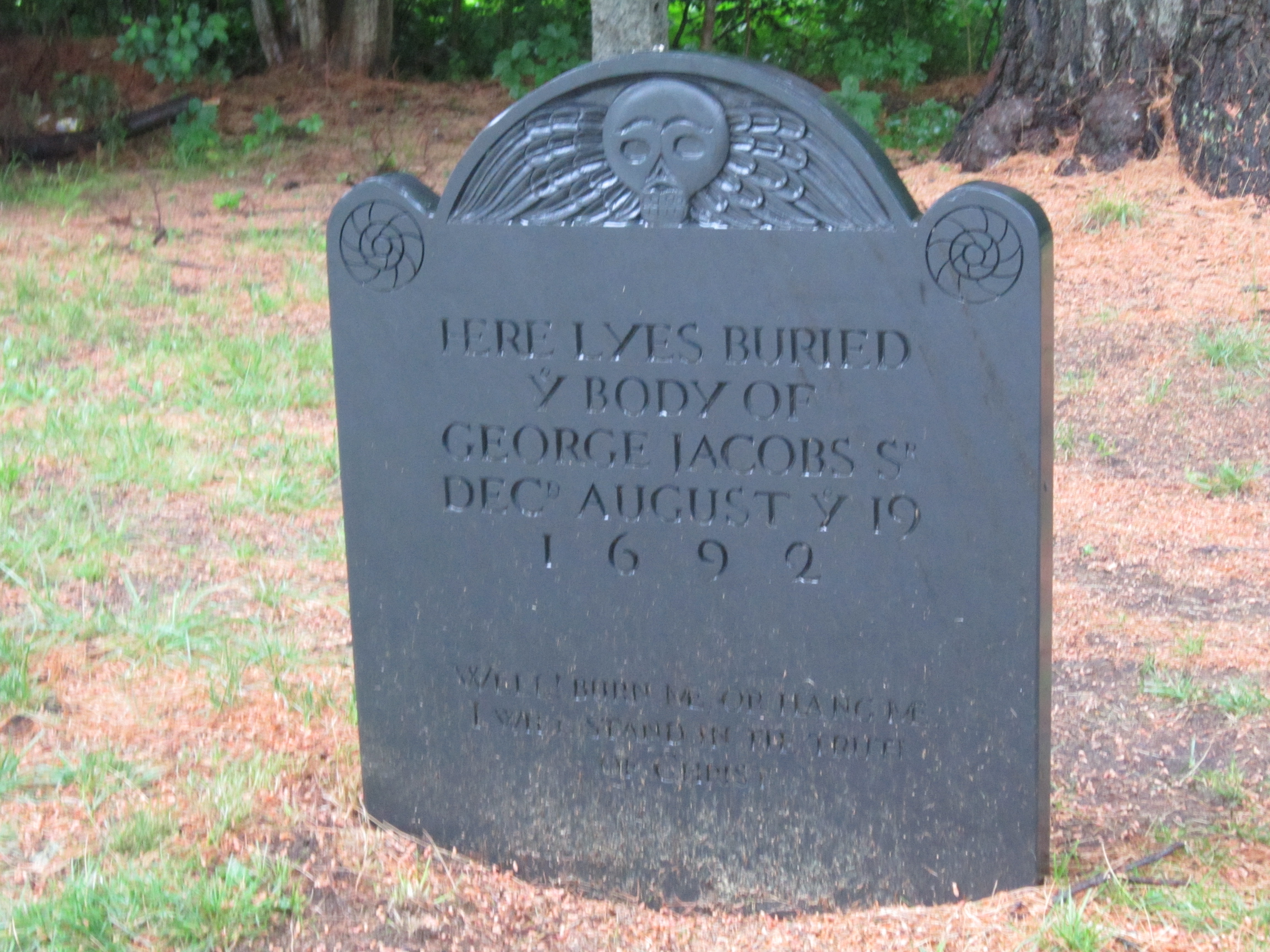
George Jacobs Sr. was accused of being a warlock by no less than 12 people, including his granddaughter Margaret Jacobs. He found the charges amusing at best, laughing them off publicly when questioned. Despite this refusal to admit any wrongdoing, he was found guilty and was one of the first men to be executed during the trials, on August 19, 1692. Some time was to pass before there would be any further additions to his story. In 1711, after reparations were made to George Jacobs family, his body was moved to the family farm from its original resting place, the location known by those who had witnessed the execution, and re-buried. In 1864, his remains were rediscovered on the family property and, as the ownership of the property was to change hands, the body was claimed by the town of Danvers. It remained in their possession until 1992 when the 300th Anniversary of the trials created the perfect opportunity to finally rebury George Jacobs Sr., this time on the Rebecca Nurse Homestead.
The bugs were picking D apart, clearly enjoying his delicious blood, and the rain fell harder just outside the trees as they struggled to keep us dry. It was fascinating to see all the old graves and get a view that perhaps not everyone experiences. We were having a good time but worried about the cost of lingering too long on the property. As we took our leave, a plan started to form in my mind. I suddenly knew what I wanted our next destination to be.

Photography in the rain is rather difficult. But we didn’t know if we’d ever get this opportunity again. (Click to view Larger)
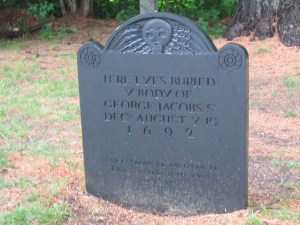
The current, and final (?), resting place of George Jacobs Sr. (Click to view Larger)
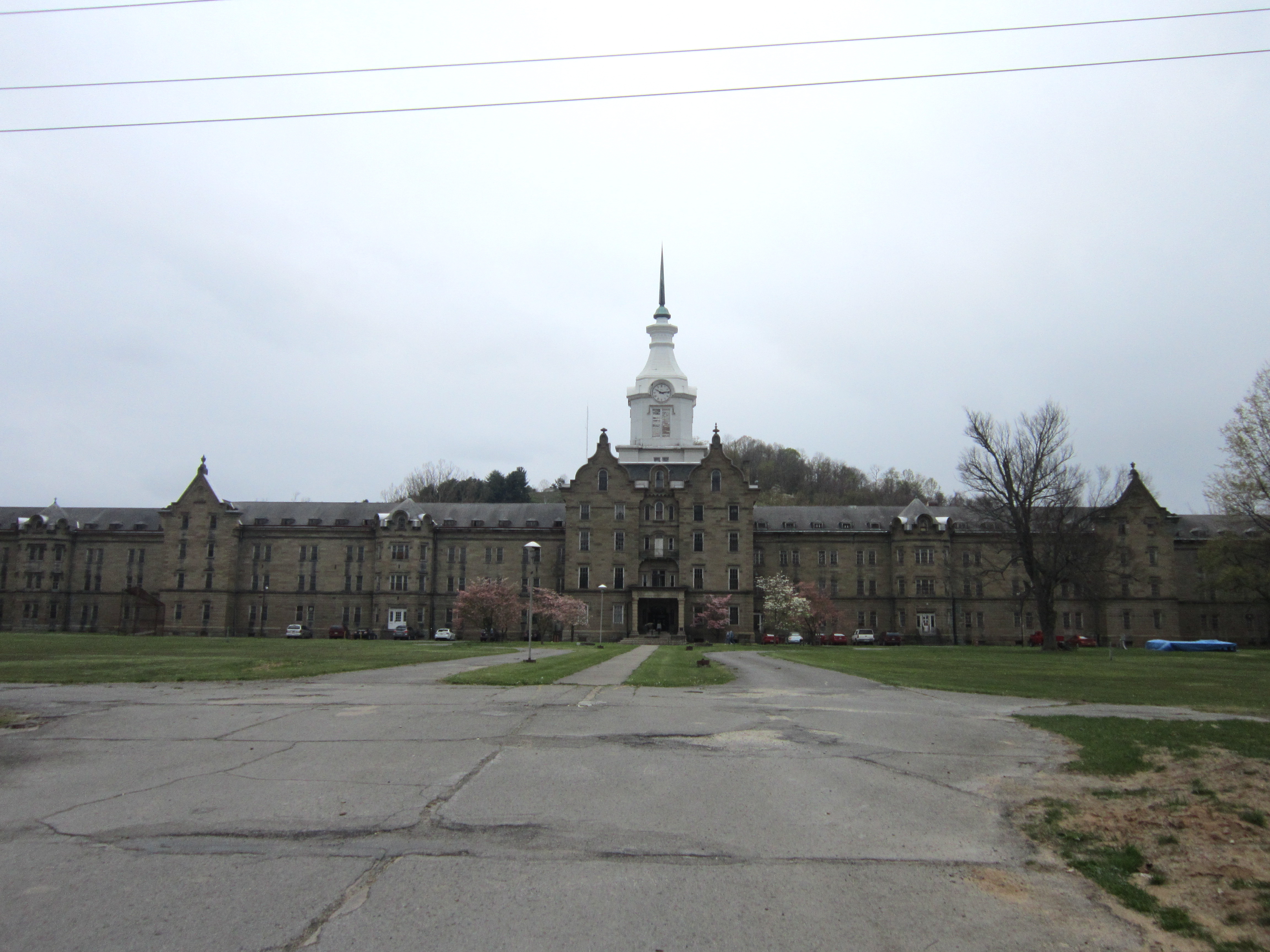
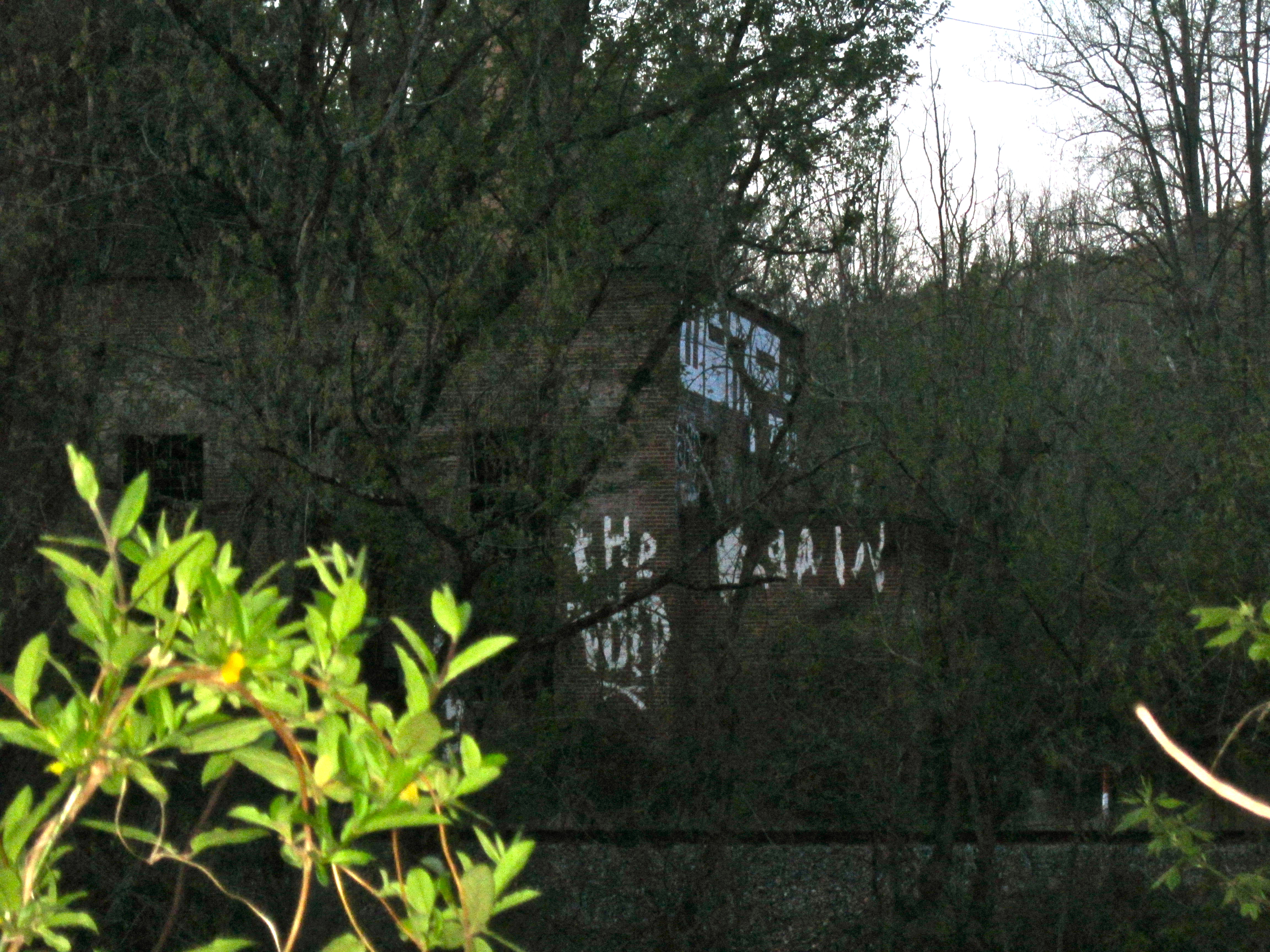
In 1878, The Danvers State Hospital was built on Hathorne Hill, overlooking the town of Danvers. The construction was to follow the Kirkbride Plan, named after Dr. Thomas Story Kirkbride who believed in beautiful settings and large buildings with lots of wide open spaces and windows. The idea was that all these elements together would provide a better environment for healing the troubled individuals that found themselves institutionalized for a variety of mental conditions and ailments. Large asylums like Danvers State were all over the place in the 19th Century but in the 1960’s, as new treatments were developed and the emphasis shifted to alternate methods of care, the population of the institute saw a sharp decline. In 1992, it was closed due to budget cuts. Soon afterwards, the Danvers State Hospital (also known as the Danvers State Insane Asylum), gained a darker reputation with a rise in stories of strange happenings and possible hauntings. One particular tale that sticks out in my mind is the one in which an urban explorer approached the shuttered complex looking to have his own adventure when he noticed a light on in one of the windows. As none of the buildings currently had working electricity, he was quite terrified by the occurrence of light where there shouldn’t have been any. He never got further than the spot on which he stood before turning and running away. The residents of Danvers, knowing that the asylum was built on the former property of Witch Trial judge John Hathorne (hence Hathorne Hill), took to calling it The Witch’s Castle. It became almost like a kind of Mecca for paranormal enthusiasts.
Before too long, a company came along looking for an opportunity to build a housing development where the unused buildings of the former asylum stood. In 2006, all the buildings were demolished with the exception of the imposing outer facade of the main administration building, which found new life as the current facade of the new administration building for an apartment complex. The cemetery was left on the property, but it isn’t visible from any of the roads there and it definitely isn’t talked about. I suppose this is only natural. Would you live somewhere if you found out that it was once the site of a mental institution? It certainly would make marketing to prospective tenants more difficult. What would they say, I wondered, if they knew about the hidden cemetery?
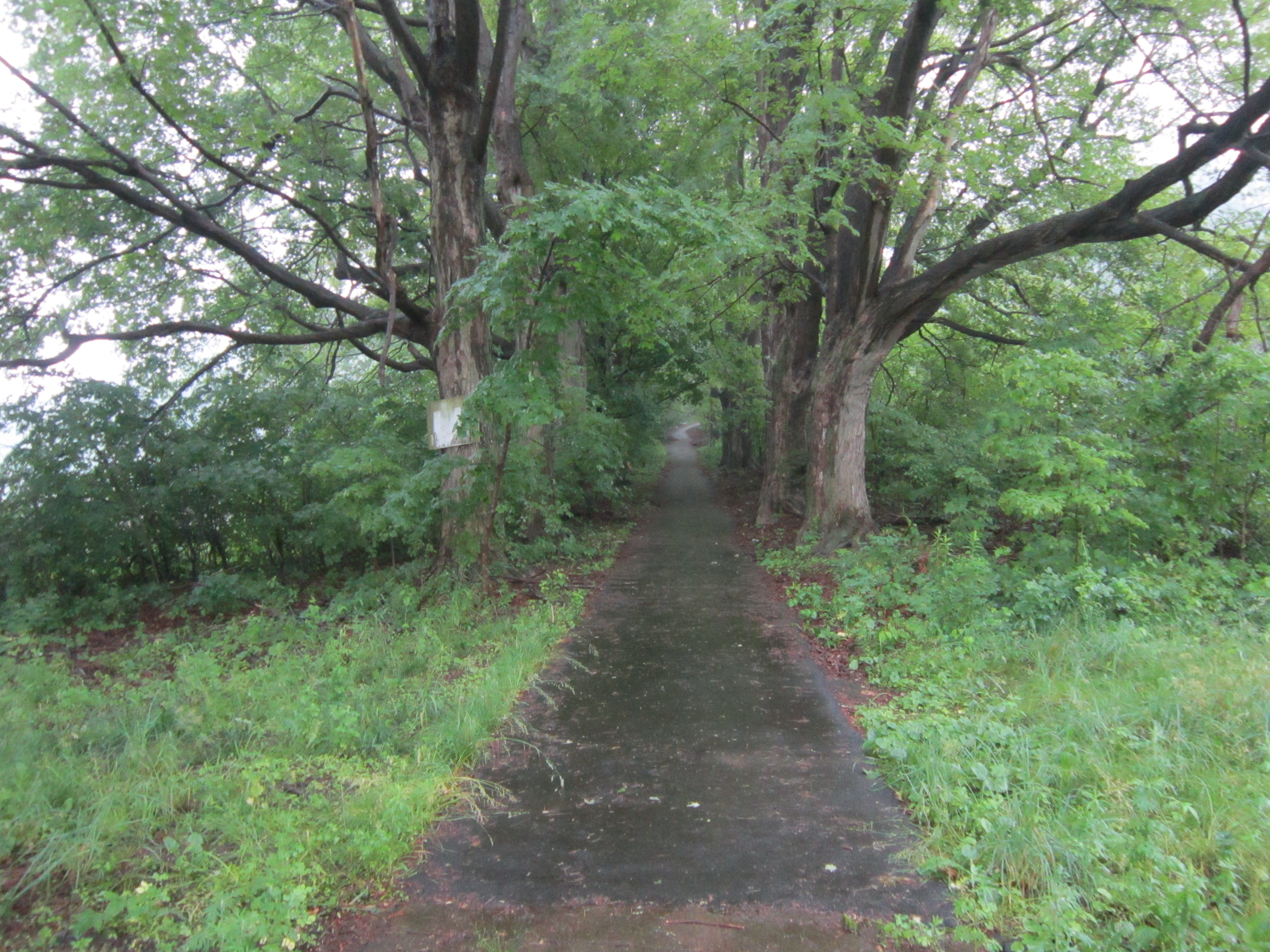
It is a sad fact of reality that those with mental health issues have often, throughout history, had to face a social stigma which only increases the further back in the historical record you go. Many patients were abandoned by their families, and in large enough numbers that a cemetery would be necessary. It’s location isn’t obvious. We didn’t know where to start looking but we took our chance with a field further down the hill. The remnants of old pipes dotted the landscape. Occasionally we came across some odd looking object we couldn’t identify just left on the ground. It was as though the demolition had stopped and whatever remained was left scattered around. No cemetery though, so we had to keep looking. Another area of the property has a long winding path that leads into the woods, with overhanging trees like something out of a creepy horror movie. Amidst the trees we found a dish and fork, and a stone which looked to have been a sign post of some sort before its metal plate was removed. But still no cemetery. The rain would increase and then recede in fits and starts. It would pour and then pull back to a slight drizzle. It was the Summer, so we weren’t exactly dressed for the occasion. D had been checking his smart phone for any help its internet connection might provide us. The directions left behind by other travelers can be found online, but you have to know how to follow them. In the dim light, I fear we misinterpreted the rudimentary map we saw as we continued to drive around for several hours.
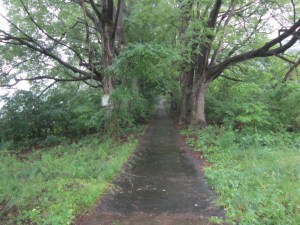
A dark path leading into the woods. Where have I heard of something like that? (Click to view Larger)
Eventually, D had a kind of epiphany about what we got wrong. We were looking at the map from the wrong direction and once we got our bearings it lead us to what a nearby sign post called “The Memorial.” A viewing platform, overlooking the town, made out of stone and with a bench. There are no informational kiosks there to let people in on the history of the property or even the town it overlooks. Near to this spot is a path that is lined with tall grass on both sides. If you aren’t looking in the right direction, and it happens to be pouring rain, your chances of seeing it are slim. We came across it in the near darkness as the sky opened up above us. The rain came crashing down all around us and we started to sprint over the path. I grew tired quickly, I was out of shape and the air went out of my lungs. I was soaked and worn out, but it seemed like the wrong moment to give up. We had been looking for a long time. We had to keep going.
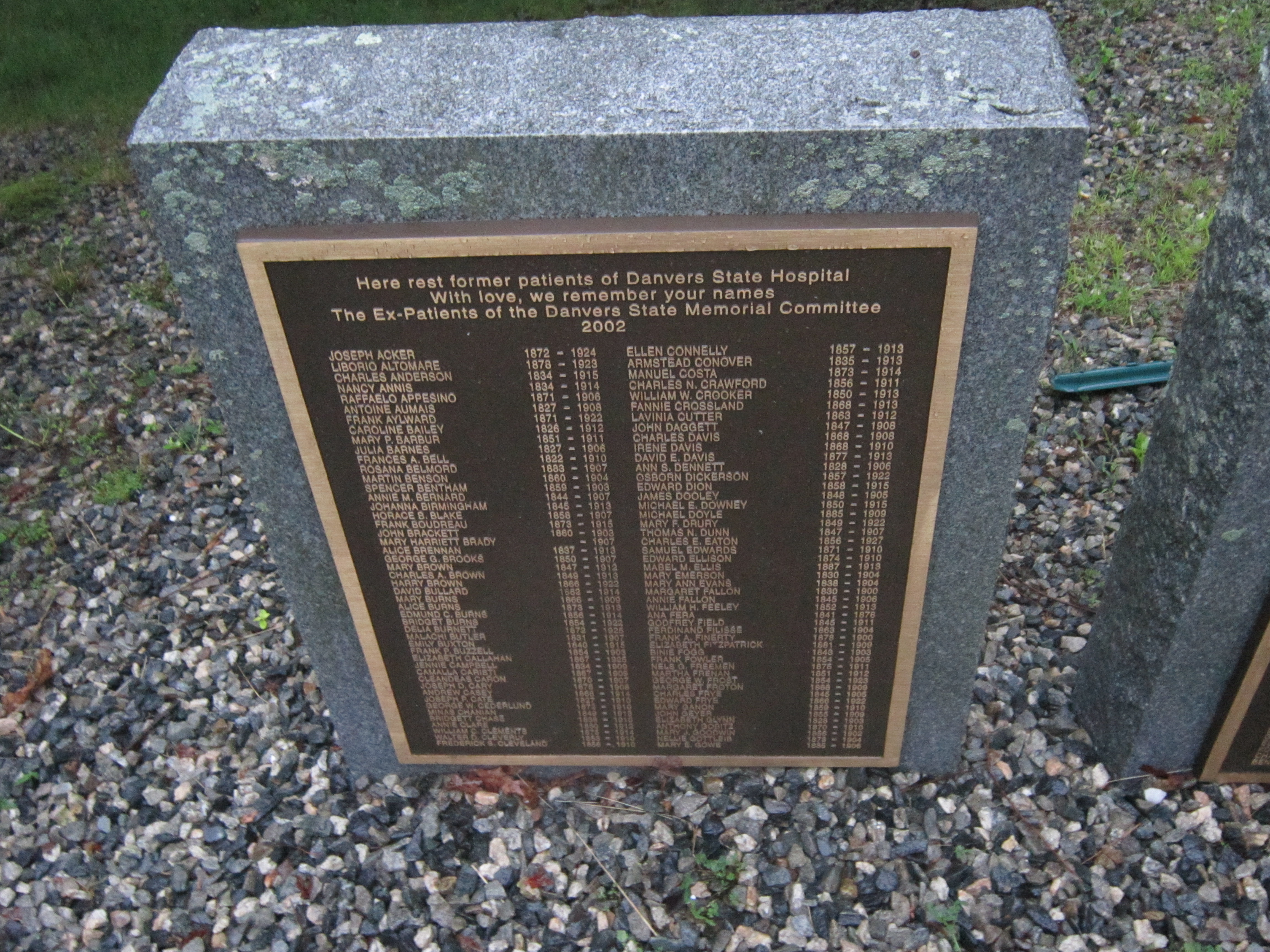
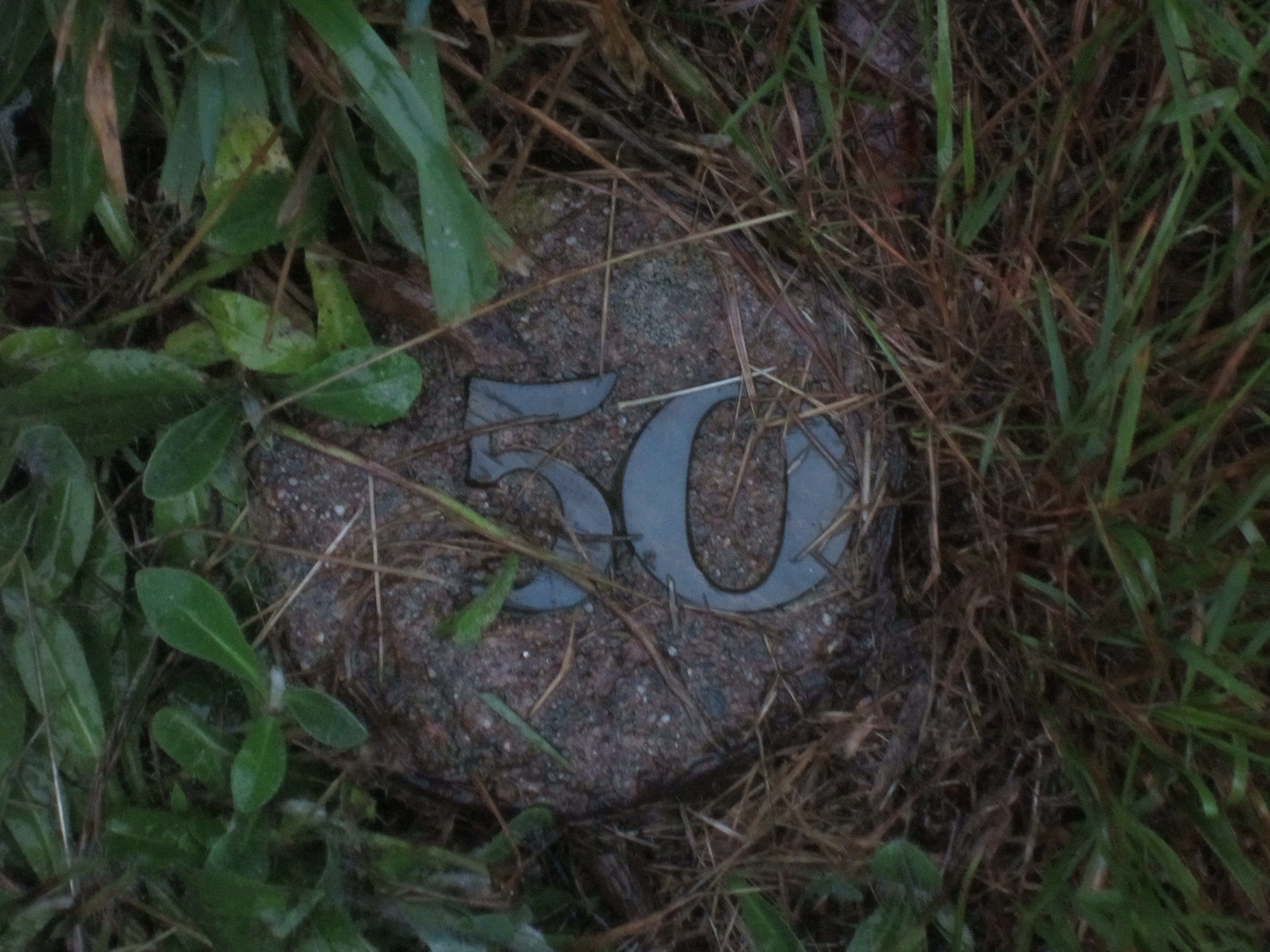
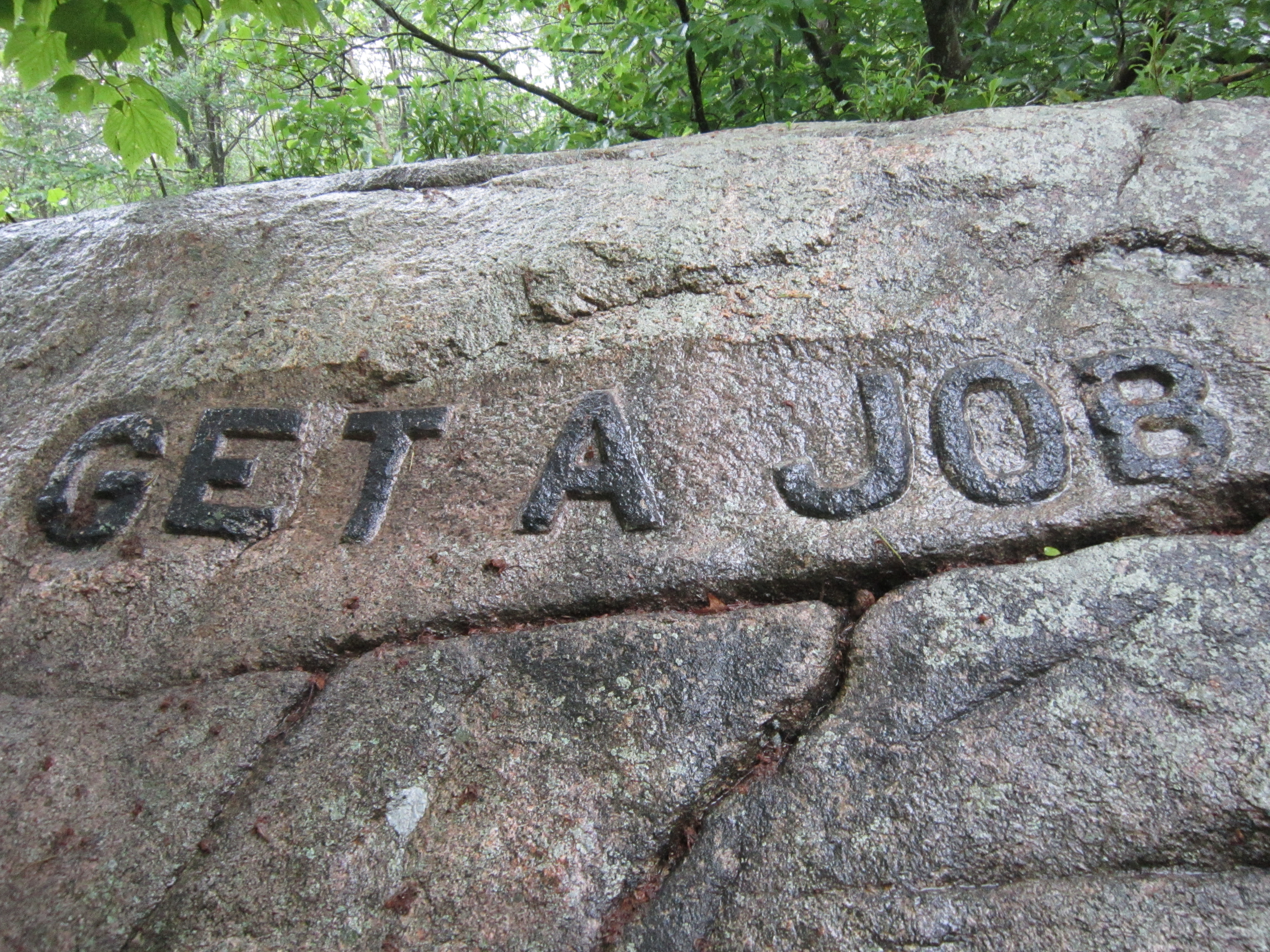
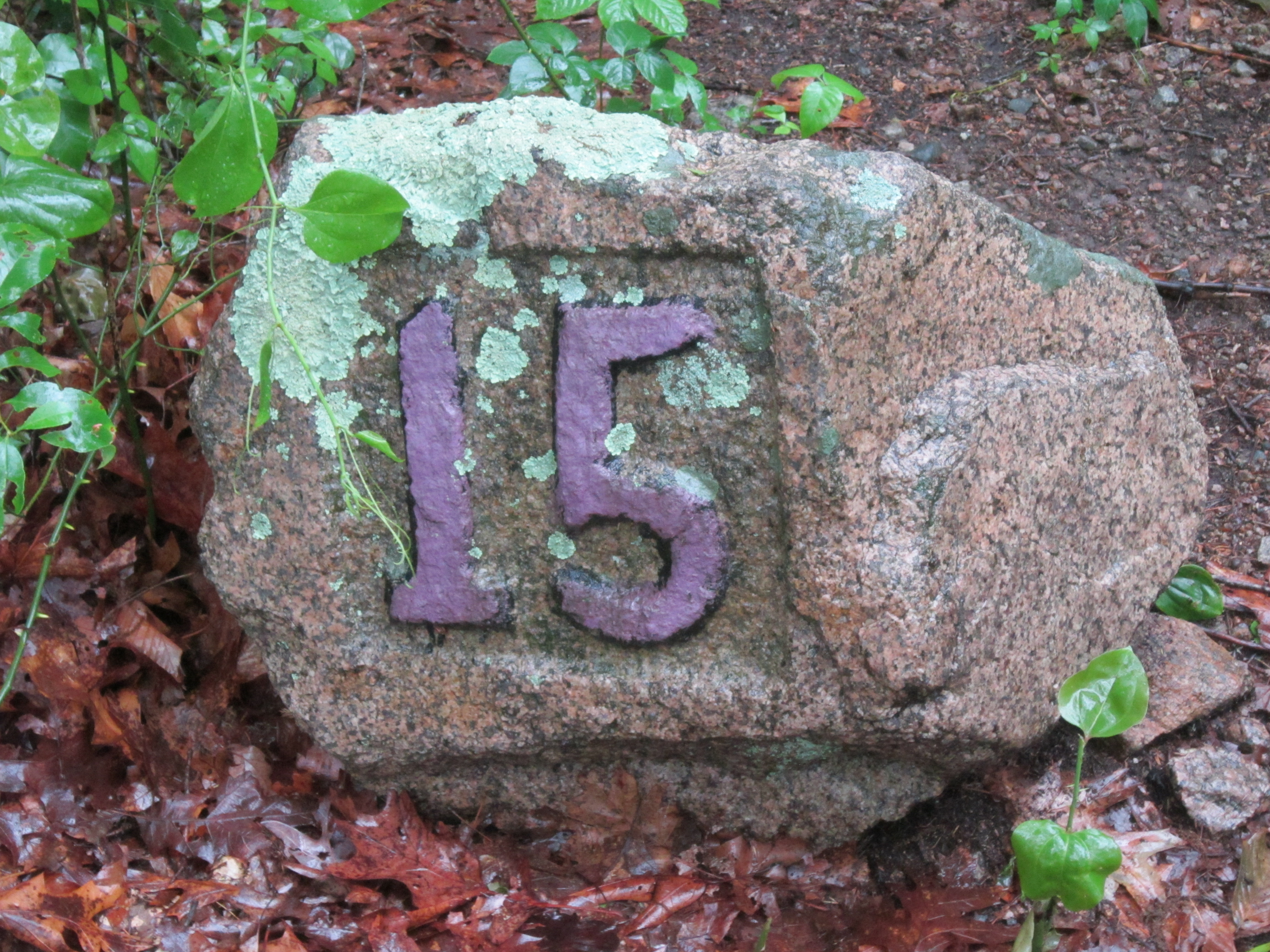
D was looking down the path at me, feeling more soaked by the second. If we were going to be standing in the rain for much longer we couldn’t waste any more time. My second wind kicked in like a jolt of electricity to my system. I pushed myself into the large clearing just beyond the grass lined path and spied an opening straight ahead of our position. A large rock with writing on it was barely discernible in the poor light. On this rock words declaring our arrival at the cemetery were faintly readable. We had made it. No time to dawdle. I knew our visit would be short, but there was a great satisfaction in finally reaching our goal. The weather hadn’t been able to stop us. The graves alternated between having names, and simply having numbers where a proper stone hadn’t yet been placed. Out of over 1,000 burials rumored to have taken place on the property, only 200 have been identified for certain. There are three memorial stones in the center that name as many people as could be discovered, but there are a lot of blank spaces at the end. I took what pictures I could, but many were blurry or too dark. Some day, when the light shines through the trees on the fields below, I will return. But at that moment we knew the adventure had reached its conclusion. As D sprinted back down the path, I took one last look before turning and racing into the darkness.
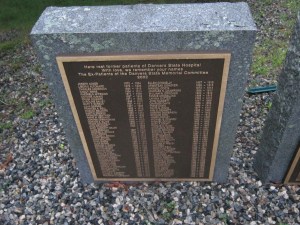
One of the three memorial stones in the cemetery for the former Danvers State Hospital. (Click to view Larger)

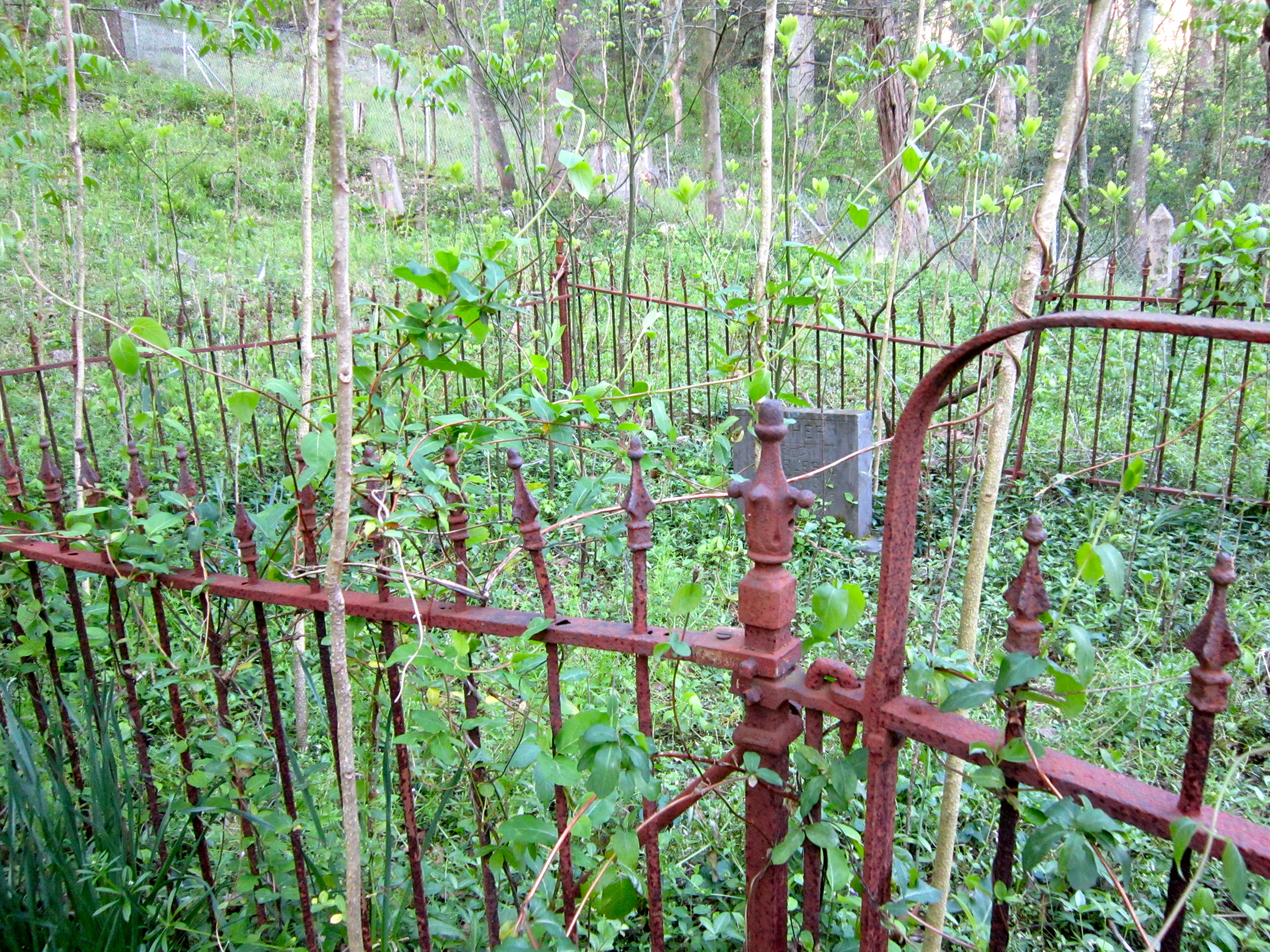
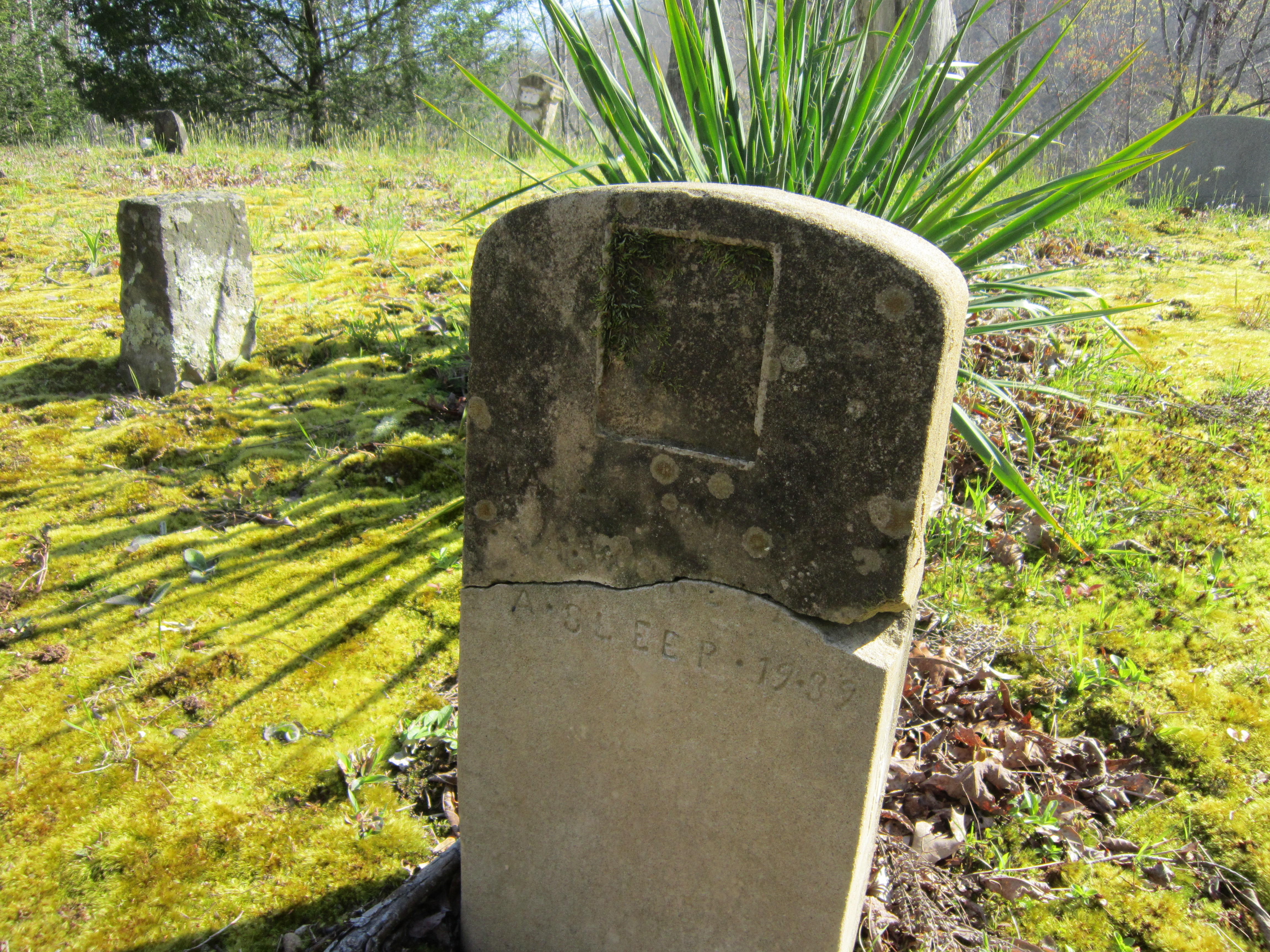
A number for a name. Who lies buried here? (Click to view Larger)
–J
Further Reading:
http://www2.iath.virginia.edu/salem/home.html (A great source of information regarding the Salem Witch Trials. Contains quite a few things I never saw mentioned elsewhere, and links to scans of old documents as well)
http://www.danversstateinsaneasylum.com/home.html (The asylum as people once knew it may be gone but its history lives on here, with fascinating photos and information for those who didn’t get enough in this post)





 Splintered Kernels